

If you’re planning a trip to the Amazon, one of the animals you’re likely hoping to see is the pink river dolphin (Inia geoffrensis). These unique freshwater dolphins are known for their striking pink coloration, intelligence, and sociability.
Pink river dolphins, also known as boto or bufeo in some parts of the Amazon, are found in the Amazon and Orinoco river basins, including in the Cuyabeno Wildlife Reserve in Ecuador. They are the largest freshwater dolphins in the world, with males growing up to 2.5 meters (8.2 feet) in length and females up to 2.3 meters (7.5 feet).
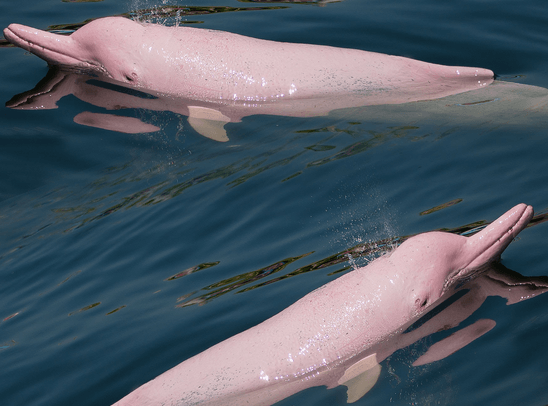
One of the most distinctive features of pink river dolphins is their color. While they are born gray, as they age their skin turns pink, a change that is thought to be due to increased blood flow to their capillaries. However, their color can also vary depending on their mood, diet, and water conditions.
In addition to their striking appearance, pink river dolphins are also known for their intelligence and sociability. They are highly social animals and have been observed engaging in complex social behaviors, such as cooperative hunting and caring for their young. They also have large brains relative to their body size, and have been observed using tools and showing signs of self-awareness.
Despite their many fascinating qualities, pink river dolphins are unfortunately endangered. Their populations are threatened by a number of factors, including habitat destruction, pollution, and hunting. They are sometimes killed for their meat or for use as bait in fishing, and their body parts are sometimes used in traditional medicine. The International Union for Conservation of Nature (IUCN) lists pink river dolphins as “near threatened” due to these threats.
If you’re lucky enough to see a pink river dolphin on your Amazon trip, it’s important to appreciate these amazing animals and support their conservation. You can do this by learning more about the threats facing them and supporting organizations working to protect them, such as the World Wildlife Fund’s Amazon River Dolphin Initiative. With your help, we can work to ensure that these unique and intelligent animals continue to thrive in the Amazon for generations to come.
 English
  Español
  Deutsch
  Français
  Italiano
  Português do Brasil
  Polski